

While October’s designation as Augmentative and Alternative Communication (AAC) Awareness Month is well familiar to us, TPC Speech Therapists Jena Hinz and Christine Hartz spearheaded our effort to spotlight it. AAC has always been a cornerstone of how we empower our students, and we are excited to share that impactful work with our wider community.
AAC is about much more than helping students communicate their basic wants and needs. It’s about giving them opportunities to express their personalities, share their ideas, build relationships, advocate for themselves, and participate more fully in the world around them.
Supporting Communication in Every Environment
AAC encompasses a range of tools and strategies that supplement or provide alternatives to spoken communication. At TPC, these supports take many forms, including iPads equipped with voice-output applications such as Proloquo2Go or TouchChat, picture-based communication books, and core vocabulary boards. Classrooms and therapy spaces also incorporate visual supports that help students make choices, participate in activities, and interact with teachers and peers.
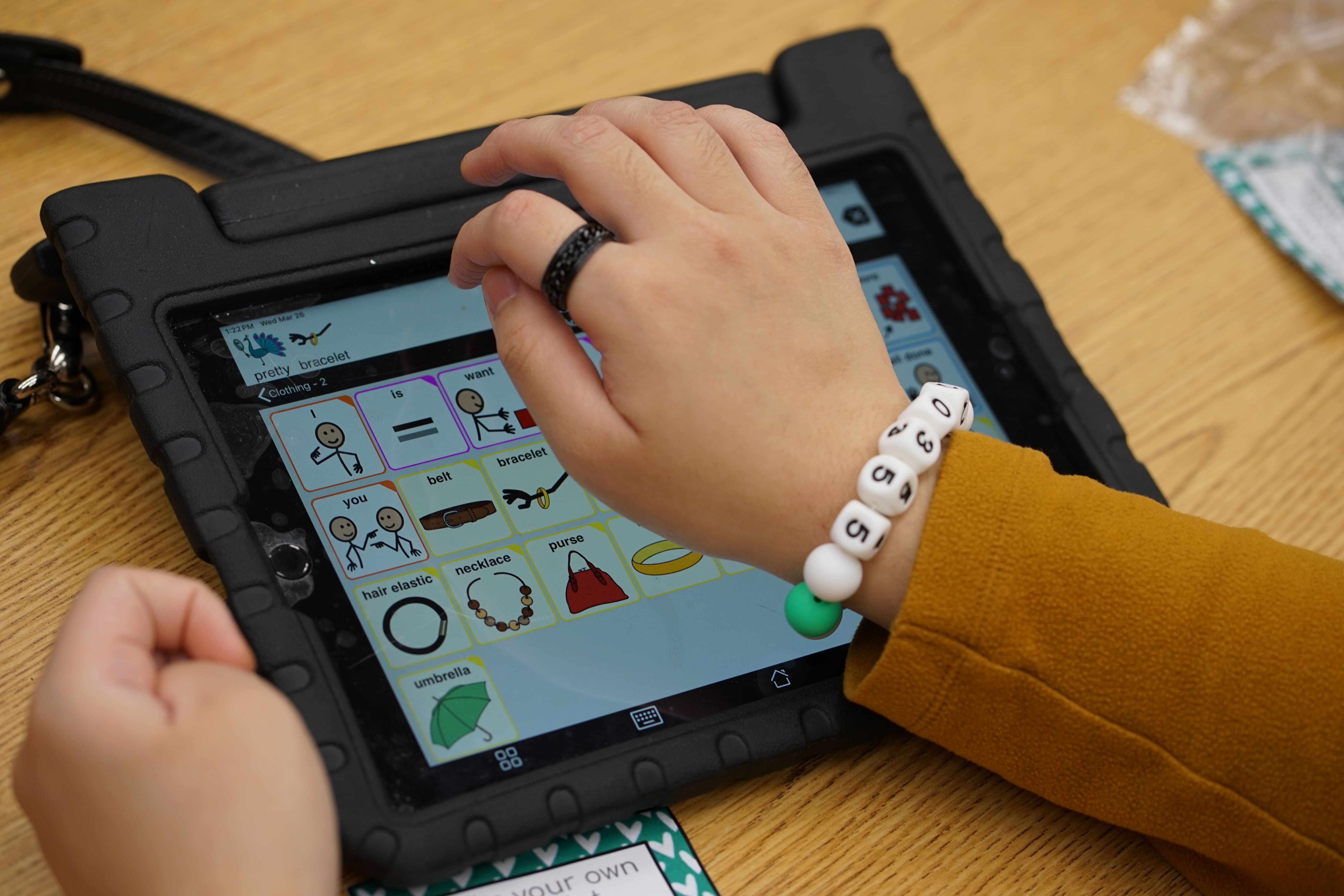
While AAC is often associated with individuals who do not use spoken language, its applications extend much further. Students who communicate verbally may also benefit from additional support when expressing their thoughts, communicating their needs, or making themselves understood. By incorporating AAC throughout the school environment, TPC recognizes that effective communication is not limited to speech alone.
As Christine Hartz, Speech Coordinator at The Phoenix Center, explains,
“The absence of spoken language does not mean the absence of something to say. It is our responsibility to honor each individual’s dignity, respect their unique voice, and recognize every form of communication as meaningful.”
Building Confidence Through Everyday Experiences
The impact of AAC becomes especially meaningful when students apply their communication skills in everyday situations. At TPC, students use their devices to make school-wide announcements, participate in the Pledge of Allegiance during school concerts, and communicate with others during classroom and recreational activities. These experiences provide opportunities for students to initiate interactions, express preferences, and participate more independently in their school community.
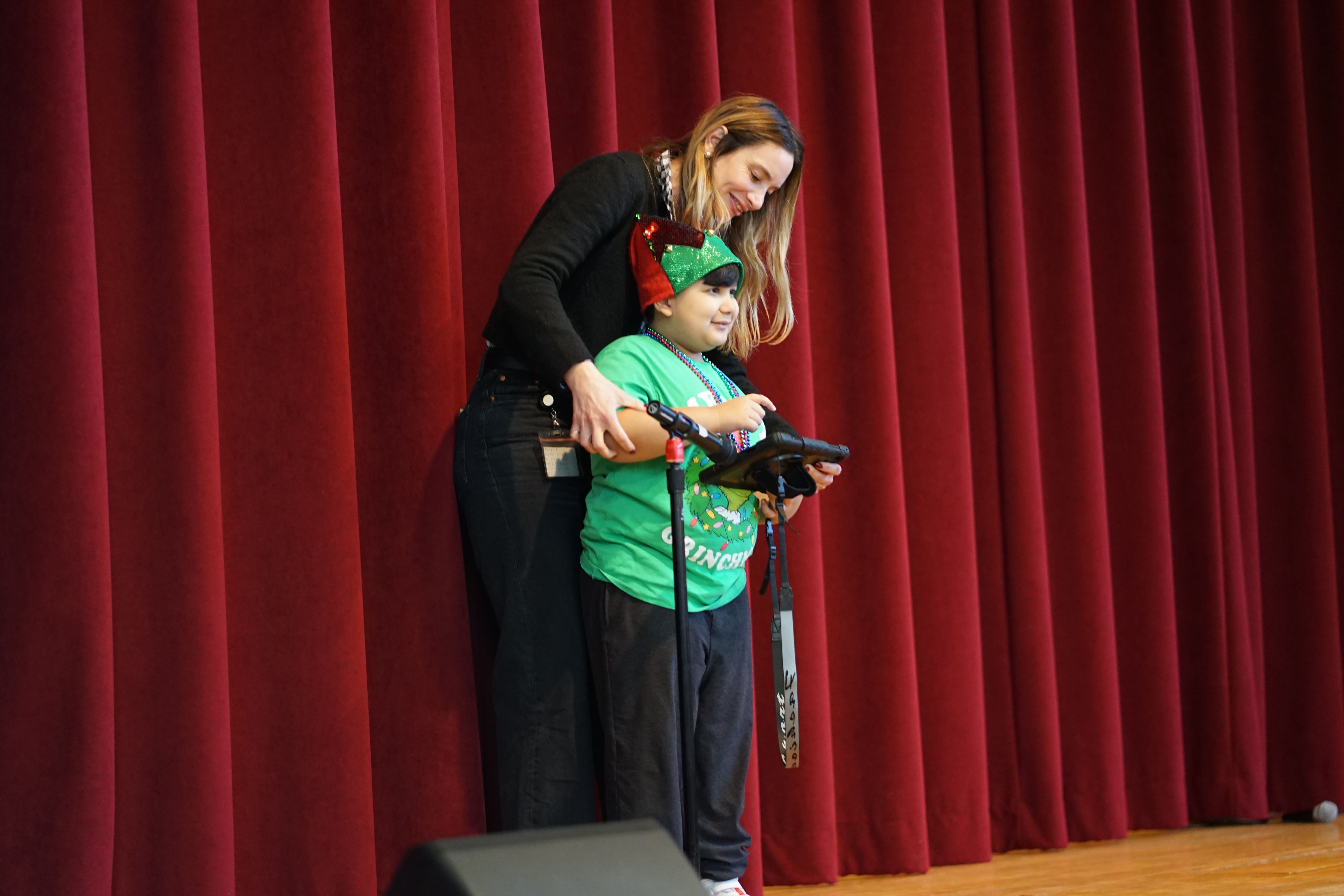
AAC also plays an important role in preparing students for experiences beyond the classroom. During weekly Community-Based Instruction (CBI) outings, students practice communicating with cashiers, ordering food at restaurants, and interacting with members of the community. In vocational settings, communication devices help students indicate when they have completed a task, ask questions, and request additional instructions, reinforcing skills that support greater independence in workplace environments.
One particularly memorable example occurred when a TPC student participated in an interview with a News 12 reporter during a visit featuring TPC’s Brew Crew. Using his personal AAC device, the student was able to ask a question and respond to another, demonstrating how communication technology can support meaningful participation in real-world experiences. This moment offered a glimpse into the communication and vocational skills students are developing through initiatives like TPC’s Brew Crew program.
An Individualized, Collaborative Approach
At The Phoenix Center, AAC implementation begins with understanding each student’s unique abilities and communication needs. Speech-language therapists use their professional judgment and observations to introduce and evaluate different communication supports, with specialized AAC evaluations requested through students’ sending districts when appropriate. The objective is to identify systems and strategies that support functional communication while providing students with consistent opportunities to use them throughout the school day and at home.
Collaboration among teachers, therapists, paraprofessionals, and families is essential to this process. Speech-language therapists work alongside classroom staff to model communication strategies during instruction, while paraprofessionals are encouraged to participate in therapy sessions to reinforce these approaches in other settings. Families also receive training and ongoing guidance to support the use of AAC systems at home, helping students develop communication skills that carry over into daily life.
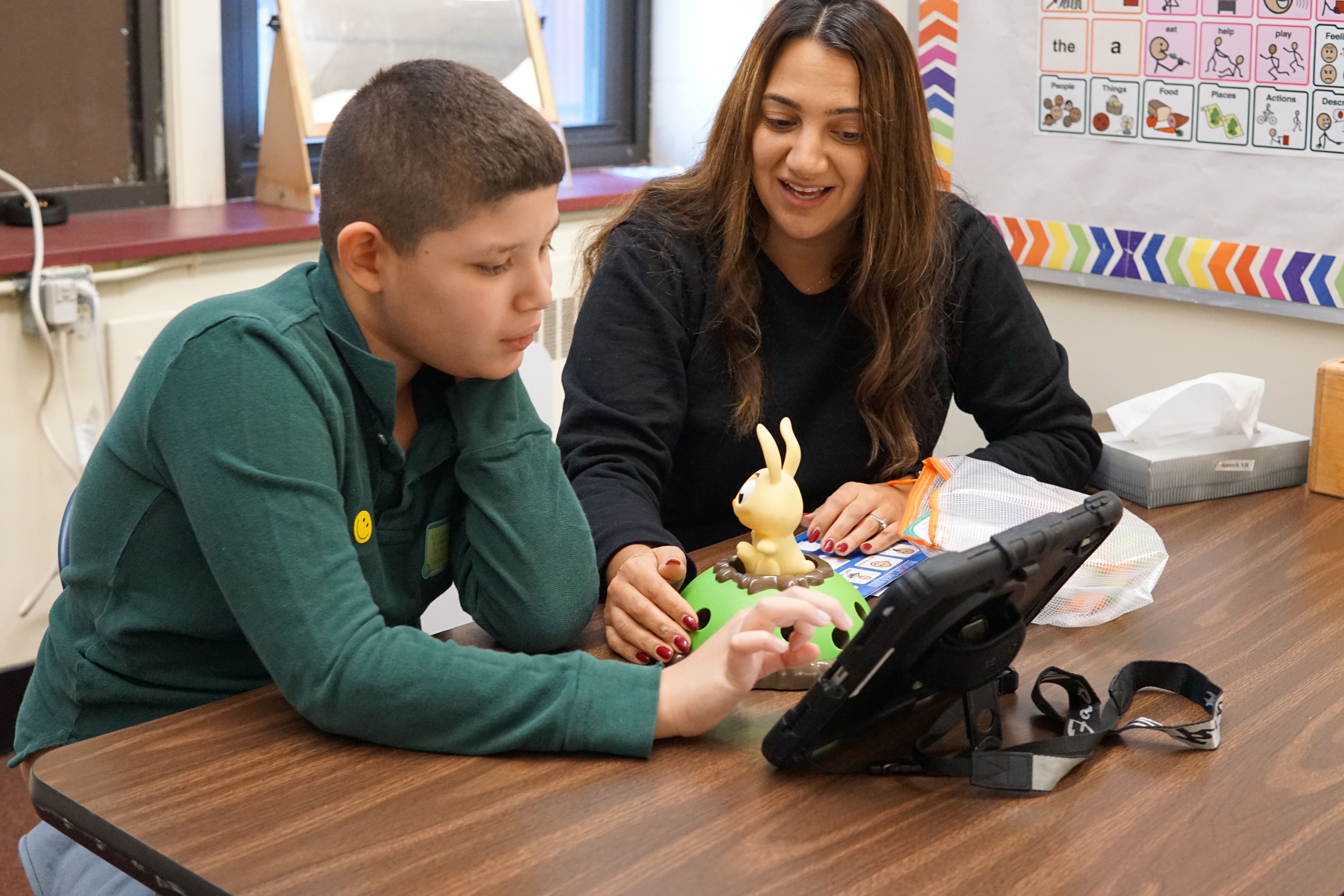
These collaborative efforts extend into TPC’s community-based and vocational programs, as well as inclusion opportunities with Washington School and Nutley High School. By practicing communication across different environments and with a variety of communication partners, students have opportunities to strengthen their independence, build relationships, and participate more confidently in their communities.
Recognizing Every Student’s Voice
AAC Awareness Month provides an opportunity to recognize that communication involves far more than expressing basic wants and needs. It includes sharing ideas, asking questions, expressing emotions, developing friendships, and advocating for oneself. For students who benefit from AAC, access to appropriate communication tools can help make these essential forms of self-expression and participation possible.
For Jena Hinz, Speech Therapist at The Phoenix Center, consistent access to these tools is especially important:
“Just because a student does not always spontaneously and consistently utilize their AAC system, does not mean that they shouldn’t always have access to it!”
This perspective reinforces an important principle of TPC’s approach: meaningful communication requires not only the right tools, but also ongoing opportunities and encouragement to use them. By integrating AAC into learning, social interaction, vocational preparation, and community experiences, The Phoenix Center continues to support its broader mission of developing life-centered skills that prepare students for life beyond the classroom.